


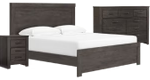
 Bedroom set
 King Size Beds
 Queen Size Beds
 Full Size Beds
 Daybeds
 Dresser & Mirrors
 Chest of Drawers
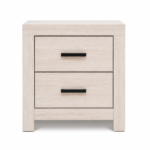 Nightstand
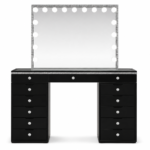 Vanity
 Twin Size
 Livingroom Set
 Recliner
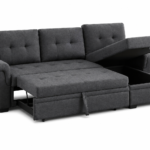 Sectional Couch
 Loveseat
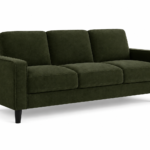 Sofas
Sofas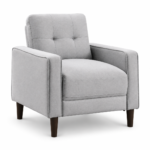 Chairs
 Sleeper Sofa
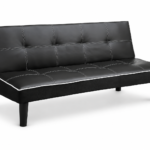 Sofa Bed & Futon
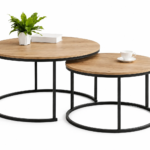 Coffee Table & End Table
 Tv Stands
 Dining Sets
 Chairs & Tables
 Counter & Stools
 King Size Mattresses
 Queen Size Mattresses
 Full Size Mattresses
 Box Spring Foundation
 Bunk Beds
 Loft Beds
 Trundle Beds
 Home Office
 Desks
Desks
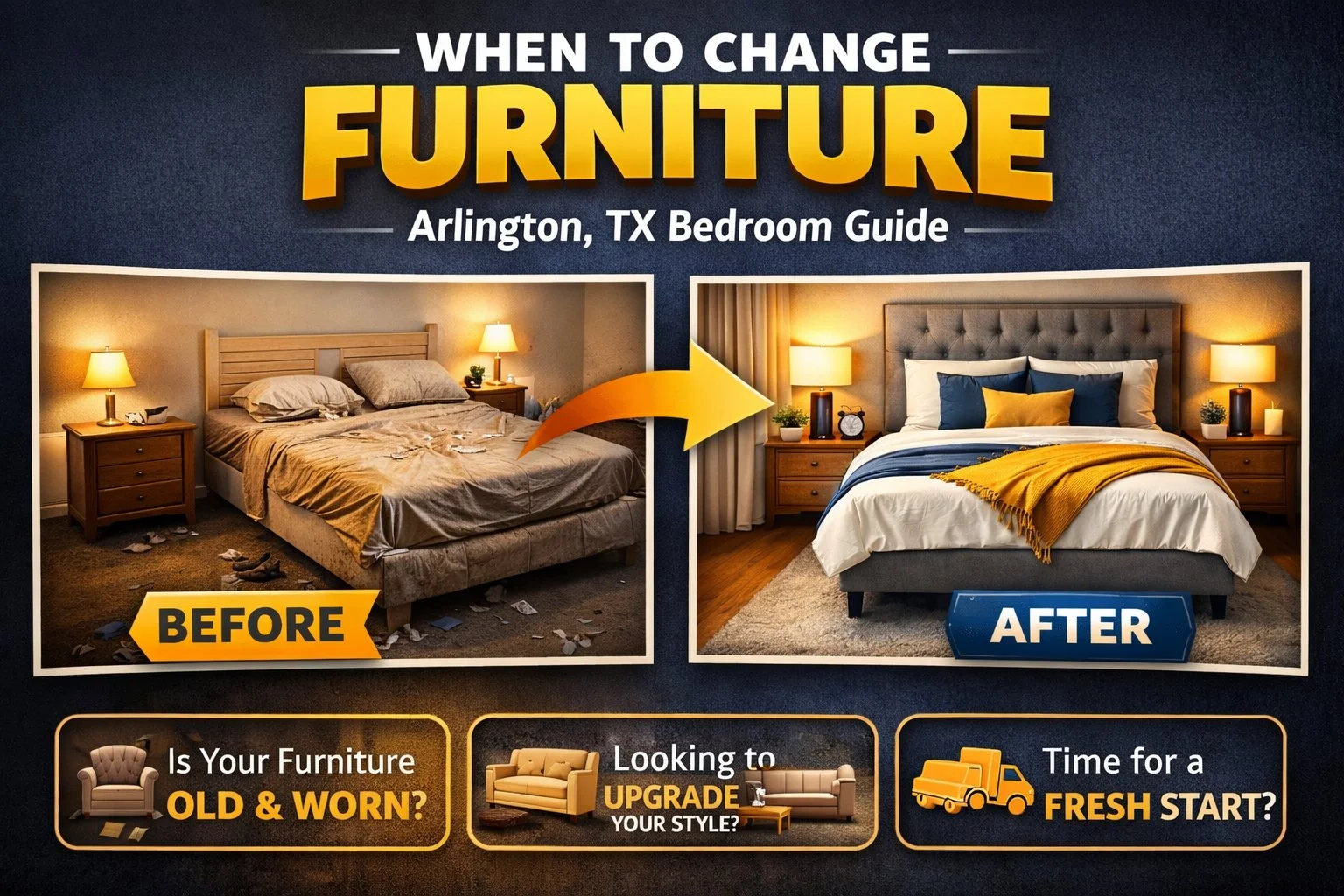
Most people wonder if they’re changing bedroom furniture too soon or waiting too long. The answer depends on three factors: structural integrity, lifestyle changes, and whether your current setup still serves your needs.

Industry data shows most homeowners replace bedroom furniture every 8-15 years, but quality pieces can last twice that long with proper care.
After helping over 3,000 Arlington families select bedroom furniture since 2015, we’ve evaluated hundreds of furniture sets at various price points and quality levels.
This guide draws from real customer experiences, manufacturer specifications, and direct testing in our showroom to help you determine the right replacement timeline for your situation.

You’ll learn exactly when furniture needs replacement versus simple repair, how to maximize your investment with financing options, and what quality indicators matter most when shopping locally or online.
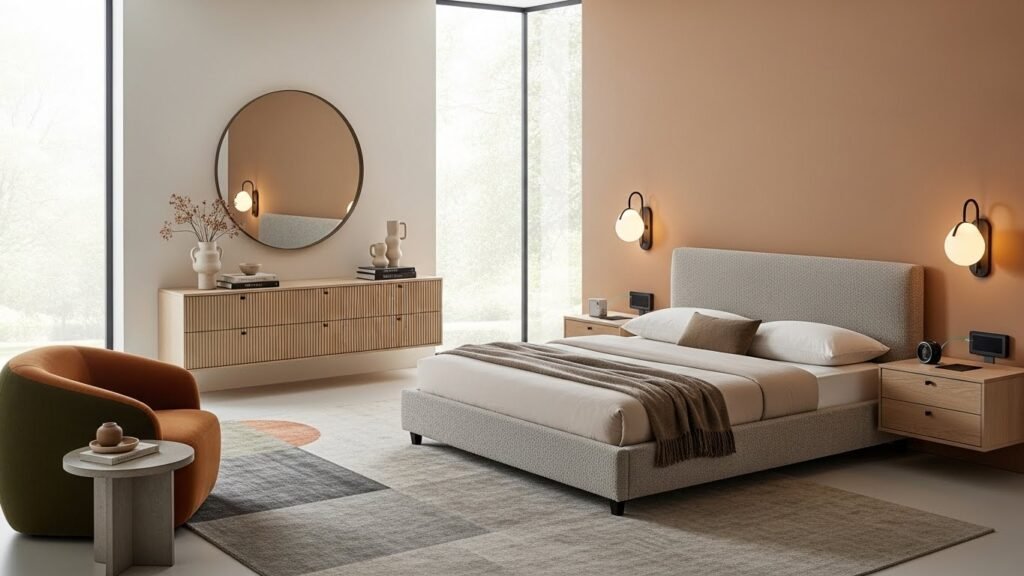
The bedroom is Ugly, but can’t change Furniture
We developed this decision model after analyzing replacement patterns across different furniture grades and usage scenarios. It removes guesswork from the “should I replace this?” question.
Purpose: Objectively assess whether your bedroom furniture needs replacement based on weighted factors that actually affect daily use and home value.
The Five Assessment Factors:
1. Structural Integrity (40% weight)
- Joint stability and frame soundness
- Drawer glide function
- Door alignment and hinge condition
- Surface substrate condition
2. Aesthetic Relevance (25% weight)
- Style compatibility with current décor
- Finish condition and repairability
- Color/stain match availability
- Design era appropriateness
3. Functional Performance (20% weight)
- Storage capacity vs. current needs
- Accessibility and ergonomics
- Space efficiency in the current room
- Feature compatibility (outlets, lighting, etc.)
4. Replacement Cost Justification (10% weight)
- Repair cost vs. 50% of replacement value
- Remaining useful lifespan estimate
- Availability of matching pieces
- Resale or donation value
5. Life Stage Alignment (5% weight)
- Family composition changes
- Health/mobility requirements
- Work-from-home needs
- Planned home changes
How to Use It:
Score each factor 1-10, then multiply by the weight percentage. Total scores above 65 indicate replacement makes sense now.
Scores of 45-65 suggest planning for replacement within 12-18 months. Below 45 means focus on maintenance and repairs.
Outcome Interpretation: This framework accounts for both practical wear and lifestyle evolution.
A structurally sound but aesthetically dated set might score 55—not urgent, but worth budgeting for. A wobbling bed frame with failing joints could score 75+ even if it looks acceptable.
When Bedroom Furniture Actually Needs Changing

Real replacement needs differ significantly from marketing-driven upgrade cycles.
Here’s what actually matters.
Structural Failure Points
Bedroom furniture reaches end-of-life when repairs exceed 50% of replacement cost or when safety becomes a concern. Watch for these specific indicators:
Bed Frames and Headboards: Side rails that bow or flex under normal weight indicate compromised structural integrity.
Center support beams that crack or split cannot be reliably repaired. Slat systems that repeatedly break or sag point to frame weakness, not slat quality.
Metal frames that bend or have weld points that crack need immediate replacement.
Dressers and Chests: Drawer boxes that separate at corner joints signal substrate failure.
Drawer glides that bind, skip, or require lifting to close have exceeded their service life. Tops that sag between supports or show delamination cannot bear normal loads safely.
Cases that lean or rack when drawers open indicate joint failure throughout the piece.

Nightstands and Armoires: Doors that won’t stay closed or require force to latch have misaligned frames.
Shelves that bow under typical loads (books, electronics) show inadequate thickness or span. Loose legs or bases that wobble on level floors need replacement, not shimming.
Material-Specific Lifespans
Different construction methods deliver vastly different durability timelines.
Solid hardwood construction typically provides 20-30 years of daily use before refinishing becomes necessary.
Joints can be reglued, surfaces refinished, and hardware replaced. Quality dovetail joinery in drawers often outlasts the finish.
Engineered wood with hardwood veneers delivers 12-18 years before veneer edge wear or delamination appears.
Once veneer damage occurs, repair costs rarely justify the investment. The substrate remains stable longer than the surface.
MDF and particle board furniture averages 7-12 years before joint failure or surface damage makes replacement necessary.
These materials don’t accept repairs well. Screw holes strip, edges chip, and water damage spreads quickly.
Metal frames last 15-25 years if the powder coating remains intact. Once rust starts, it accelerates rapidly. Welded joints outlast bolted assemblies significantly.
Upholstered pieces need reupholstering every 8-12 years, but frames should last 20+ years. If the frame fails before the fabric wears, the quality was insufficient from the start.
How Often Do People Change Bedroom Furniture?

National replacement patterns reveal distinct cycles based on life events rather than arbitrary timelines.
Primary Replacement Triggers
Household Formation (Ages 25-35): First adult bedroom set purchase typically occurs when moving from rental furniture or college-era pieces.
This furniture often lasts 10-15 years before family expansion drives supersizing.
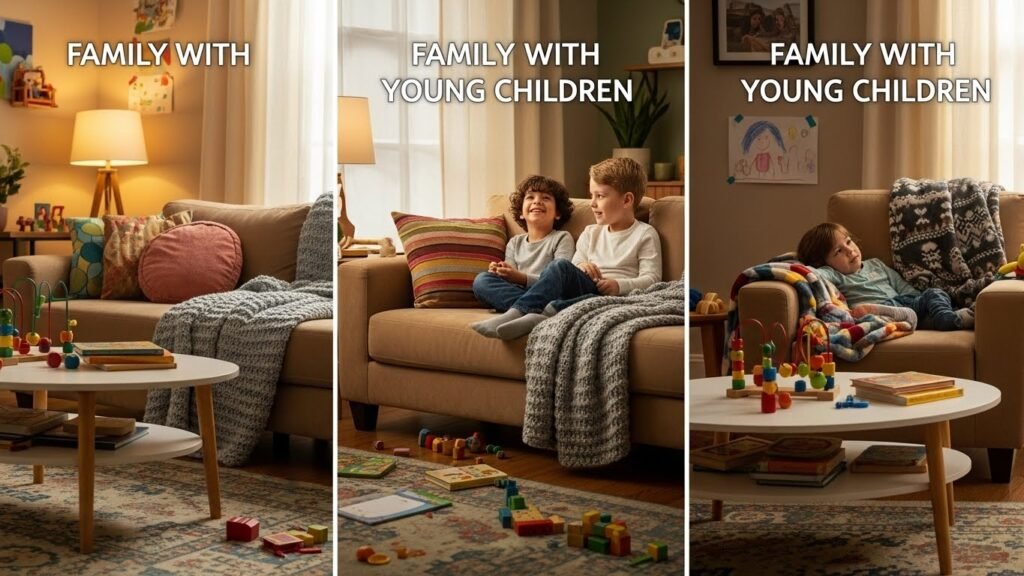
Family Growth (Ages 30-45): Couples with young children replace bedroom furniture to accommodate larger beds, additional storage, and more durable finishes. This set typically lasts through child-rearing years.
Empty Nest Refresh (Ages 50-65): After children leave, many homeowners finally invest in the furniture they actually want rather than what’s practical for family life. These pieces often become permanent.
Downsizing or Relocation (Ages 65+): Moving to smaller homes or retirement communities drives furniture replacement based on space constraints rather than condition.
Market Data Shows Actual Timelines
Arlington-area customers we’ve worked with replace bedroom furniture on these typical schedules:
Entry-level sets (under $1,500): 5-8 years average ownership. Mid-range sets ($1,500-$4,000): 10-15 years average ownership. Premium sets (over $4,000): 15-25+ years, often passed down. Custom or heirloom pieces: Generational ownership with refinishing
The difference isn’t just quality—it’s initial fit to needs. Sets purchased to “make do” get replaced quickly. Sets purchased after careful consideration last decades.
What Most Guides Don’t Tell You About Furniture Replacement

Industry advice often skips practical realities that affect actual replacement decisions.
The Matching Piece Problem
Manufacturers discontinue furniture lines every 3-5 years. If you need to add a dresser or nightstand to match your existing set, you typically have a 36-48-month window from the original purchase.
After that, exact matches disappear. This matters more than most buyers realize when they “start with just a bed”, intending to add pieces later.
Regional Climate Effects on Furniture Lifespan
Texas heat and humidity cycles stress furniture differently than northern climates. Solid wood expands and contracts more dramatically here.
Engineered materials in non-climate-controlled storage rooms delaminate faster. AC cycling causes repeated expansion-contraction that loosens joints 20-30% faster than stable climates.
If you’ve moved furniture from another climate zone, expect different aging patterns.
The True Cost of “Temporary” Furniture
Buying cheaper furniture “just for now” almost always costs more over 10 years than buying quality initially.
A $600 dresser replaced twice costs $1,200 plus disposal fees and shopping time. A $1,400 dresser that lasts 15 years costs less per year and maintains better resale value.
Financing quality furniture at 0% APR for 12 months often makes more sense than paying cash for disposable pieces.
Showroom vs. Online Timing Differences
Local showroom purchases in Arlington typically deliver within 1-2 weeks for in-stock items. Custom orders take 6-10 weeks.
Online purchases from national retailers average 4-8 weeks for standard delivery, with some items backordered 12+ weeks. If you need furniture quickly due to a move, breakage, or other deadline, local options provide flexibility that free shipping can’t match.
Disposal Costs Nobody Mentions
Getting rid of old bedroom furniture costs $50-$200 through junk removal services. Some retailers include haul-away with delivery, others charge $50-$100 per piece.
Donation pickup has 2-4 week waitlists and quality restrictions. These costs matter when comparing total replacement expenses.
Can You Change Furniture in Different Living Situations?
Your legal ability to replace furniture depends entirely on your housing arrangement.
In Owned Homes
Complete freedom to change any furniture at any time. The only considerations are budget, disposal logistics, and delivery access.
Homeowners should coordinate furniture replacement with any planned renovations since delivery teams need clear pathways and protection from construction debris.
In Furnished Rentals (Apartments and Corporate Housing)

Landlord-provided furniture typically cannot be removed or replaced without explicit written permission. Most furnished rental agreements require you to maintain the provided furniture in its original condition.
You can request permission to temporarily store landlord furniture and use your own pieces, but approval isn’t guaranteed.
Always get this in writing before purchasing replacement furniture. Some corporate rentals allow furniture swaps if you restore the original setup when leaving.
In Unfurnished Rentals
Complete freedom to furnish with your own selections. No landlord approval needed. Consider the furniture scale carefully since you may move to different-sized spaces.
Modular pieces and standard dimensions provide more flexibility across different floor plans than custom-sized or built-in style furniture.
In Shared or Roommate Situations
Common areas require agreement from all occupants before furniture changes.
Personal bedrooms typically allow individual furniture choices unless the rental agreement specifies otherwise.
Document existing furniture condition during move-in to avoid disputes over normal wear versus damage requiring replacement.
Changing Room Furniture: Space Planning Essentials
Successfully changing bedroom furniture requires measuring carefully and understanding layout constraints before shopping.

Critical Measurements Before Shopping
Room Dimensions: Measure wall lengths, accounting for baseboards, doorways, windows, and closets.
Note the ceiling height for tall armoires or four-poster beds. Identify which walls have electrical outlets (dressers with mirrors need nearby power).
Door Clearances: Measure the interior bedroom door width and height.
Measure exterior doors and stairways that furniture must navigate during delivery.
Many large dressers and bed frames won’t fit through standard 30-32-inch doorways when assembled. Confirm the delivery team can disassemble if needed.
Window and Architectural Features: Note window heights and widths—beds placed under windows need lower headboards.
Locate HVAC vents that furniture shouldn’t block. Identify any sloped ceilings in attic bedrooms that limit furniture height along certain walls.
Existing Furniture Footprints: If current furniture works spatially, measure those pieces as your size guide.
If your room feels cramped, measure and map everything to identify where you can reduce the footprint.
Common Spatial Mistakes When Changing Furniture
Oversizing the Bed: Upgrading from queen to king sounds appealing until you realize it leaves only 18 inches for a nightstand that’s now unusable.
King beds need a 12×14-foot minimum room dimension to allow adequate walking space and functional furniture placement.
Ignoring Door Swing Paths: A dresser placed perfectly on paper becomes problematic when the door swings directly into the drawer pull. Map door swings and ensure 3+ inches of clearance.
Forgetting About Making the Bed: Beds need 24-30 inches of clearance on at least one long side for making the bed and changing sheets.
Pushing beds into corners looks space-efficient but creates daily frustration.
Blocking Outlets and Cable Access: Modern bedrooms need accessible outlets for phone charging, lamps, and electronics.
Furniture that blocks all outlets creates inconvenient extension cord situations.
Change Everything Furniture & Home Décor: Complete Room Refresh Strategy
Replacing all bedroom furniture at once offers advantages but requires coordinated planning.
Benefits of Complete Room Replacement
Purchasing a complete bedroom set typically costs 15-25% less than buying individual pieces separately.
You get guaranteed style and finish consistency across all pieces—no matching concerns.
Delivery and assembly occur on the same date, minimizing disruption. You can dispose of all old furniture at once, often with included haul-away service.
Financing a complete set provides better terms than multiple smaller purchases. Many retailers offer 0% interest for 12-24 months on purchases above certain thresholds ($1,500-$2,500 typically).
This makes premium furniture accessible with monthly payments under $100.
Complete Replacement Timeline
Weeks 1-2: Planning and Budgeting Measure room, identify needs, set a realistic budget, including delivery and disposal.
Research styles, compare local showroom options versus online retailers.
Calculate financing options to determine the monthly payment comfort level.
Weeks 3-4: Shopping and Selection Visit showrooms to assess quality and scale in person. Compare construction methods, drawer joinery, and finish durability.
Test bed frames for stability and noise. Confirm delivery timeframes and haul-away services. Submit a financing application if using payment plans.
Week 5-6: Order and Preparation. Place an order and confirm the delivery date. Prepare the room by removing existing furniture or scheduling a donation pickup.
Clean the room thoroughly—furniture replacement is the easiest time for deep cleaning. Plan for furniture assembly and packaging disposal.
Week 7-8: Delivery and Setup Receive delivery, inspect all pieces before signing acceptance.
Complete assembly same day if possible. Dispose of packaging materials. Arrange new furniture and test drawer operation, door alignment, and overall functionality.
When to Phase Replacement Instead
Budget constraints, space limitations during renovation, or uncertainty about long-term needs make phased replacement smarter.
Start with the bed since it’s the room’s focal point and gets the most use. Add case goods (dressers, nightstands) when the budget allows.
This approach lets you confirm the style works before committing to everything.
Phased replacement works best when buying from manufacturers with stable product lines.
Ask retailers about line longevity before purchasing if you plan to add pieces later.
Can You Change the Color of Leather Furniture?
Leather bedroom furniture can be recolored, but success depends on the leather type and the existing finish.
Recoloring vs. Replacing Leather Pieces
Genuine Leather: Full-grain and top-grain leather accept professional recoloring well. Specialized leather dyes penetrate the surface and can shift color significantly.
Costs range $200-$500 per piece professionally, or $50-$100 for DIY kits. Results last 3-5 years with proper maintenance.
Bonded Leather and Vinyl: These materials have polyurethane topcoats that prevent dye absorption.
Recoloring attempts peel or flake within months. Replacement is more cost-effective than recoloring bonded leather pieces.
Professional vs. DIY Recoloring
Professional leather refinishing services strip existing finish, repair damage, apply new color, and seal the surface.
This process costs $300-$600 per upholstered bed or bench but provides reliable, long-lasting results.
DIY leather recoloring kits ($40-$90) work for minor color shifts on well-maintained leather.
They cannot cover significant damage or dramatically change colors. Surface preparation determines 80% of outcome quality.
Most DIY attempts fail due to inadequate cleaning and prep work, not product quality.
When Recoloring Makes Sense
Consider recoloring leather furniture when the frame and padding remain in excellent condition, but the color no longer fits your décor.
A structurally sound leather upholstered bed that simply clashes with new paint colors is a good recoloring candidate.
Replace rather than recolor when leather shows cracking, peeling, or surface damage. These issues indicate the material has reached end-of-life.
Recoloring damaged leather wastes money—the new color highlights rather than hides the damage.
For bedroom benches, upholstered headboards, and similar pieces in Arlington’s climate, consider that humidity and temperature swings stress leather faster than in moderate climates.
If your leather furniture is 10+ years old and shows wear, replacement typically makes more sense than investing in recoloring.
Smart Shopping: How to Change Furniture Without Overspending
Strategic purchasing approaches help you get quality furniture while managing costs effectively.
Financing vs. Cash Purchase Analysis
When Financing Makes Sense: 0% interest promotions for 12-24 months cost nothing extra if you pay within the promotional period. This preserves cash for other needs and allows buying better quality than your current savings permit.
A $3,000 bedroom set at 0% for 18 months costs $167 monthly—manageable for most budgets.
Regular financing at 9-15% APR makes sense when you need furniture immediately due to breakage or an emergency, but lack cash reserves.
The interest cost is often less than renting furniture or buying disposable pieces to “make do.”
When Cash Purchase Wins: If you have savings earmarked for furniture, paying cash sometimes unlocks additional discounts (5-10% off) that exceed any credit card rewards.
No payment obligations means no risk of missed payments damaging credit. Zero chance of promotional period expiration, leaving you with back-interest charges.
Quality Indicators Worth Paying For
Drawer Construction: Dovetail or dowel joinery costs 30-40% more than stapled drawer boxes but delivers 300-500% longer lifespan.
Drawers fail before case bodies in most furniture, so this upgrade directly affects total ownership duration.
Drawer Glides: Ball-bearing glides cost $15-$30 more per drawer than plastic tracks but operate smoothly for 15+ years. Soft-close features add $8-$15 per drawer but prevent slamming damage and improve the daily experience significantly.
Frame and Joint Construction: Corner blocks and metal brackets at stress points cost manufacturers $5-$10 per piece but prevent racking and wobbling.
Mortise-and-tenon or dowelled joints outlast stapled butt joints by 10+ years. These invisible features justify significant price differences.
Finish Quality: Catalyzed finishes resist moisture, scratching, and wear better than simple lacquers.
They cost 20-30% more but maintain their appearance far longer. In Texas humidity, this upgrade matters more than in dry climates.
Local Showroom Advantages
Shopping at Arlington furniture retailers provides several advantages over online-only purchasing:
You see and touch actual furniture before buying—photos never capture scale, color accuracy, or construction quality reliably. You test drawer operation, check finish consistency, and assess comfort directly.
Delivery happens in days rather than weeks. In-stock items often deliver within 72 hours. Rush delivery available for emergencies.
Direct access to customer service when issues arise. No call centers or email tickets—you speak with the people who sold you the furniture.
Local businesses have stronger reputation incentives than national warehouses.
Your purchase supports Arlington businesses that employ residents and contribute to the community’s tax base.
👉 Link to Visit Our Arlington Showroom
Common Furniture Replacement Mistakes to Avoid
Learning from others’ errors saves you time and money.
Rushing the Purchase Decision
Furniture showrooms feel urgent—sales pressure, promotional deadlines, and limited inventory warnings. Resist deciding during your first visit unless you’ve completed thorough advance research.
Quality furniture represents $2,000-$5,000+ investments. Decisions made under pressure lead to buyer’s remorse.
Take measurements, photos, and material samples home. Sleep on major decisions. If the deal is “ending today,” it will return—furniture sales are constant.
Ignoring Long-Term Maintenance Requirements
High-gloss finishes show every fingerprint and require special cleaners. Intricate carvings collect dust you’ll never fully remove. Light-colored upholstery stains immediately. White furniture shows every scuff.
Choose finishes and styles that match your actual cleaning habits, not your aspirational ones. Matte finishes hide minor wear better than glossy surfaces. Medium wood tones forgive more than very light or very dark stains.
Forgetting to Measure Delivery Path
Your perfect bedroom set is worthless if it can’t navigate your stairway. Measure doorways, stairway width and turns, hallway dimensions, and room entry. Sketch the delivery path and note the tightest clearance point.
Delivery teams can disassemble some pieces for complex deliveries, but not all furniture comes apart easily.
Confirm this before purchase, especially for large dressers and upholstered headboards.
Sacrificing Quality for Price on High-Use Pieces
Your bed frame and mattress support see daily stress. Drawer glides operate 1,000+ times yearly. These components justify quality investment. Skimping on structural elements to save $200-$300 typically costs more within 5 years.
Decorative pieces like nightstand lamps, mirrors, and accent furniture can be budget selections. Functional pieces that move, support weight, or endure daily use deserve quality construction.
Benefits and Trade-offs of Different Replacement Approaches
Understanding the pros and cons of each strategy helps you make decisions aligned with your priorities.
Complete Set Replacement
Benefits:
- Coordinated style and finish guaranteed across all pieces
- Volume discounts of 15-25% compared to individual piece pricing
- Single delivery and setup minimizes disruption
- Complete room transformation provides maximum satisfaction
- Better financing terms on larger purchases
Trade-offs:
- Higher upfront cost requires a larger budget or financing
- No flexibility to test style before full commitment
- All furniture ages at the same rate, requiring simultaneous replacement in the future
- Larger delivery requires more extensive room preparation
Best For: Homeowners ready for a complete bedroom refresh, those with a clear style vision, buyers financing the purchase, and anyone wanting maximum convenience.
Phased Replacement
Benefits:
- Spreads costs over months or years
- Allows testing style before full commitment
- Can prioritize pieces based on need and condition
- Easier to accommodate in the budget without financing
- Opportunity to find sales and clearances on individual pieces
Trade-offs:
- Risk of manufacturer discontinuation preventing exact matches
- Multiple delivery fees unless the retailer offers free shipping
- An extended timeline means living with mismatched furniture
- Per-piece pricing costs 15-25% more than complete sets
- Requires stronger organizational discipline to complete the plan
Best For: Budget-conscious buyers without financing access, those uncertain about style preferences, people who want flexibility to pause spending, and buyers willing to accept some style variation.
Repair and Refresh Current Furniture
Benefits:
- Lowest cost option by far
- Retains furniture with sentimental value
- Environmentally responsible choice
- No delivery logistics or disruption
- Can create unique, personalized pieces through refinishing
Trade-offs:
- Only viable if the structure remains sound
- Refinishing costs 30-50% of replacement but doesn’t address functional issues
- Results depend heavily on refinisher skill and furniture quality
- Doesn’t resolve space planning or style mismatch issues
- Time investment in finding skilled craftspeople and waiting for completion
Best For: Owners of solid wood heirloom pieces, those with limited budgets prioritizing function over appearance, environmentally conscious consumers, and people with a strong sentimental attachment to existing pieces.
Financing Your Furniture Change
Payment options make quality furniture accessible without depleting savings.
Available Financing Options in Arlington
Most furniture retailers in the DFW area offer multiple financing paths:
0% Interest Promotional Financing: Typically available on purchases above $1,500-$2,000. Promotional periods range from 6-24 months, depending on purchase amount.
You pay no interest if the balance is paid in full before the promotion ends. Requires credit approval with scores typically above 640.
Regular Installment Financing: APR ranges from 9.99% to 29.99% based on credit profile. Available for any purchase amount.
Terms extend 12-60 months. Monthly payments remain fixed. Accessible to a broader credit range than promotional financing.
Rent-to-Own Programs: No credit check required. Higher total cost—typically 150-200% of cash price over the contract term.
Ownership transfers after all payments are made. Good option for those rebuilding credit or with very limited credit history.
Third-Party Financing (Affirm, Progressive Leasing, Synchrony): Instant approval decisions. Rates and terms vary widely based on creditworthiness.
Some offer 0% for high-credit applicants, others charge 15-30% APR. Can be used across multiple retailers.
Calculating Comfortable Payment Amounts
Financial advisors suggest keeping all furniture payments under 10% of monthly take-home income. For example:
Monthly income $3,500 → Maximum furniture payment $350 Monthly income $5,000 → Maximum furniture payment $500 Monthly income $7,000 → Maximum furniture payment $700
This ensures furniture payments don’t strain your budget or prevent savings. If desired furniture exceeds this guideline, consider phased purchasing or modifying selections to reduce total cost.
Managing Promotional Financing Successfully
Set Calendar Reminders: Create payment due-date reminders and promotional period end-date alerts.
Missing the payoff deadline triggers retroactive interest charges on the original balance—often 20-30% APR applied backwards to the purchase date.
Pay More Than Minimum: Minimum payments on promotional financing rarely pay off the balance within the promotional period.
Calculate your required monthly payment by dividing the purchase price by the number of promotional months, then pay that amount (or more).
Example: $3,000 purchase with 18-month 0% financing requires $167 monthly payments to pay off on time.
Minimum payments might be only $75, leaving you with a large balance when the promotion ends.
Budget for the Full Term: Treat promotional financing as a commitment, not optional. Build payments into your monthly budget before purchase.
If you can’t afford the calculated monthly payment comfortably, the furniture exceeds your current budget.
👉 [Current Financing Offers and Application]
Frequently Asked Questions
How long should bedroom furniture last before changing it?
Quality bedroom furniture should last 15-20 years with normal use and proper care. Solid wood construction can exceed 25 years, while engineered wood pieces typically last 10-15 years before showing significant wear.
Can you change furniture in a furnished apartment?
Most furnished apartment leases prohibit removing or replacing landlord-provided furniture without written permission.
You can request to temporarily store provided pieces and use your own furniture, but landlords aren’t obligated to approve. Always get any furniture swap agreement in writing before purchasing replacement pieces.
Unfurnished apartments allow complete furniture freedom—you can furnish however you choose.
What’s the best time of year to buy bedroom furniture in Arlington?
January-February and July-August offer the best furniture deals in the Arlington area.
Retailers clear inventory to make room for new lines during these periods. Holiday weekend sales (Presidents Day, Memorial Day, Labor Day, Black Friday) also provide significant discounts—typically 20-40% off regular pricing.
However, if your furniture is failing structurally, don’t wait for sales. Safety and functionality outweigh modest savings.
Is it better to buy a complete bedroom set or individual pieces?
Complete bedroom sets cost 15-25% less than buying pieces separately and guarantee finished matching. This makes sense when you need multiple pieces and have clear style preferences.
Buy individual pieces when you’re uncertain about style, have budget constraints requiring phased purchasing, or only need to replace specific items.
For first-time buyers or complete room refreshes, sets offer better value. For adding to existing furniture or replacing one worn piece, individual purchases work better.
Do furniture stores in Arlington offer financing options?
Yes, most Arlington furniture retailers offer multiple financing options, including 0% interest promotional financing for 6-24 months on purchases above $1,500-$2,000, regular installment plans at 9.99-29.99% APR, and rent-to-own programs requiring no credit check.
Approval requirements and terms vary by program. Many stores also accept third-party financing through Affirm, Progressive Leasing, or similar services.
Call ahead to confirm specific programs and requirements before shopping.
Should you change bedroom furniture before or after painting?
Paint before furniture delivery whenever possible. Moving new furniture away from walls for painting risks damage and voids warranties.
Fresh paint also needs 2-3 weeks to fully cure before furniture contact—moving pieces against walls too soon can mar the finish. If you must paint after furniture arrival, remove all pieces from the room completely.
Drop cloths and painter’s tape don’t prevent all paint splatter or damage to new furniture.
Make Your Furniture Change Decision With Confidence
You now understand the key factors driving furniture replacement timing: structural integrity, lifestyle changes, and whether repairs justify the cost versus replacement.
The Furniture Lifecycle Framework gives you an objective method to assess your current pieces and plan replacement timing that fits your budget and needs.
Whether you’re dealing with failing furniture that needs immediate replacement, planning a complete bedroom refresh, or simply exploring options for a future upgrade, the right approach balances quality, budget, and timing.
Your Next Steps
If You Need Furniture Now: Visit our Arlington showroom at 1629 New York Ave to see quality bedroom sets in person, test construction quality, and work with experienced staff who can help you find pieces that match your space, style, and budget.
We offer same-week delivery on in-stock items and can schedule haul-away of your old furniture during delivery.
If You’re Planning Ahead: Call us at (817) 666-0558 to discuss financing options, confirm lead times for specific pieces, and get personalized recommendations based on your room dimensions and preferences.
We can help you create a phased purchasing plan that spreads costs while ensuring style consistency.
If You’re Budget-Focused: Ask about our current 0% financing promotions and how low monthly payments can make quality furniture accessible now, rather than settling for disposable pieces you’ll replace in 5 years.
Our financing specialists can calculate comfortable payment amounts based on your situation—no obligation.
Quality bedroom furniture represents an investment in better sleep, organized living, and a space you actually enjoy.
With proper selection and available financing, that investment fits more budgets than most people realize.
👉 Shop Bedroom Furniture Collections
👉 Calculate Your Financing Options
👉 Schedule Showroom Visit


